It is much easier today for a young composer to follow the trends of contemporary music technology than it was 20-25 years ago. I am not talking about the technology of making musical instruments of course. That would be (and in fact is) a great advantage for a composer to know how music instruments are made. However, in my experience, only few can afford spending their time and exploring the secrets of music instruments manufacturing. By Music Technology I mean various – and tending to be endless – ways the sound is produced and recorded today: live music instruments, synthesizers, computer programmes, emulators, samples, etc.
With Computer Science being part of today’s school programme, it is much easier for the young generation to cope with the challenges of contemporary music production world. The knowledge of the general principles of how computers work today helps people choose the best hardware they can afford and switch between software easily.
At the same time, the meaning of music composition has shifted from writing music on a piece of paper from scratch to processing ready-made fragments of music (more commonly known as loops) and producing new compositions without writing down a single note. Even in the areas where a more classical approach to writing music has been traditionally used, be it film or ballet music, the use of modern technology has changed and to some extent broadened its limits.
The foremost parts of contemporary Music Technology which should be considered by a young composer today are: notation, recording, sampling, mixing and mastering. The golden time when a composer wrote music and handed it over to copyists, publishers and performers seems to have vanished. Today you are expected to not only compose music, but also arrange it, make a recording using one of the DAWs, and most often mix it in order to fully meet the client’s expectations.
Digital Audio Workstations
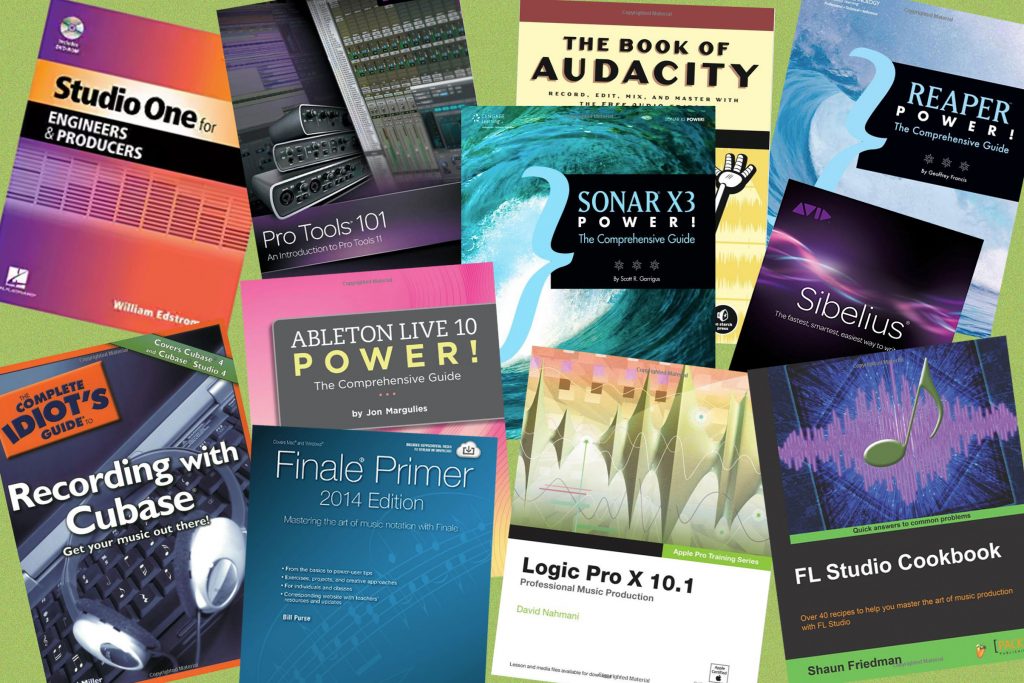
The constantly developing market of Digital Audio Workstations is presented today by more than a dozen brands. Here are some of them for you to consider:
Each of these workstations, and most probably any of the other ones which you can easily find on the internet, will let you record and edit your musical ideas. It’s not an easy decision to choose one which will suit you most, simply because it will take your time and money to sort out how it works. Even if some of them have a trial period, most of them ask for money to access the full version. To choose the right one for you – if you have not made up your mind yet – read the reviews, watch YouTube tutorials and ask fellow composers. Much relies on your preferences and your target audience. Depending on the market you are aiming at, choose the DAW which suits your goal and invest some time into learning it to an advanced level.
As a film composer, I was taught to work with Avid Pro Tools and Apple Logic Pro. Both of them are sort of industry standards, and both of them suit the purpose perfectly well. One of the drawbacks which I can mention regarding the use of these DAWs is the necessity of a high computer performance. You should keep this in mind before you decide to buy any of them. In my case, I faced a system overload with as little as a nine-track composition playback, having 4 GB of RAM and 2.26 GHz Intel Core 2 Duo processor (yes, my computer is not from the top line). Luckily, the prices of RAM and other computer components are going down little by little, so I am thinking of upgrading my hardware soon.
Apple Logic Pro
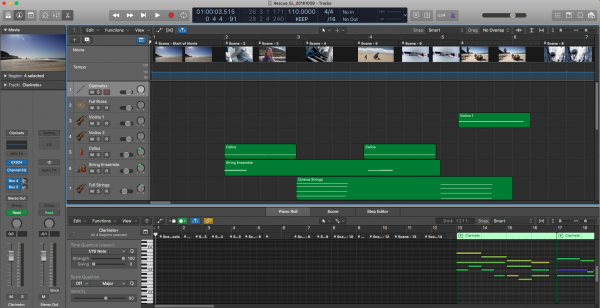
Apple Logic Pro, which is a developed and more adapted version of Apple GarageBand, includes a long list of built-in instruments. I use a simple M-Audio Keystation49 as an input source, which makes it possible for me to input most of the instruments. Of course, the strings and the brass do not sound very natural. You should consider paid sound libraries to get more natural sounds of orchestral instruments, though they will never be as natural as having been recorded in a studio.
The ability to model sound with, let’s say, Sculpture Modelling Synthesizer (as well as with various other synthesizers), the availability of various VST plugins, the ability to create your own samples – all this makes Logic Pro a powerful instrument of creating and processing sound.
Avid Pro Tools
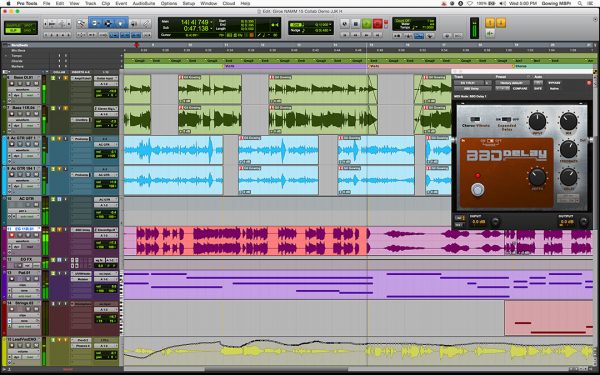
Source: www.digitalrecordingarts.com
You can also create, edit and mix music with Avid Pro Tools. It presents incredible possibilities of working with sound at every stage, be it recording or mixing. If you compose music by processing and sampling recordings, or if you record and edit live sound, you should definitely consider Pro Tools as your main software. Today you can find it in most professional recording studios worldwide. The effort of learning it will pay off in a studio where sooner or later you will find yourself in a live recording session.
The biggest advantage of a DAW is that it lets you mix and master your music on a highly-professional level. With mixing (the balancing and adjusting of the recorded tracks) and audio mastering (the making of the master recording from which copies can be made) -– you can produce a professional demo version of your composition or even prepare it for publishing. Much depends on your preferences of what you want to hear in your mix. The equipment of your home studio plays an important role. However, even a pair of simple studio amplifiers will do the job for most of your tasks.
Your computing skill in processing music is what helps you fight the challenges of the contemporary music market. The same computer skills help you save your time in case you have to present a score of your composition. To many composers, especially to those who specialise in working with samples and loops, it’s not necessary to have their music as a score. All DAWs and synthesizers let you bounce your tracks as a WAV or MP3 file. Still, to be fully equipped for the profession, you will certainly consider using music notation software.
Music Notation Software
Since this article is not about comparing the music notation software, I will not give the list of available apps here. Please have a look on the internet and use a free one or enjoy the benefits of a paid one. As promised, I will share my experience of notating music. For more than ten years I have been using Avid Sibelius.
Avid Sibelius
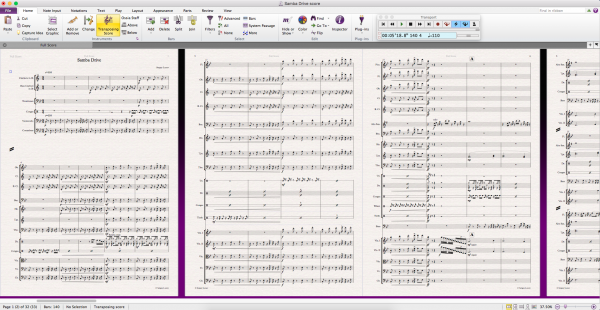
Even in its early releases, Sibelius was a great app for music students and professionals alike. With years of development, it turned to be one of the most convenient instruments of notating music. If you are good at music theory, you will have little trouble with understanding it. Whether you want to notate a choral or a chamber piece, or your choice is a fifty-instrument score, the only limit is the size of your screen and the power of your computer (yes, I have problems with playback in Sibelius, too, and I know it’s time to upgrade my hardware).
In fact, Sibelius (or Finale, which is another highly capable notating software) is a must for any composer who writes music for chamber groups or classical orchestras. It can also be used for writing music for big bands and jazz ensembles, for notating ethno- and world music compositions, and of course, for studying music. The beauty of composing in Sibelius is that it plays back every note you input with a keyboard or a mouse. It also transposes instruments for you in case it isn’t your strong side and does a lot of other helpful things which save you time and bring you closer to your main task – writing music.
The topic of music technology stretches far beyond the areas mentioned in this article. The rapidly changing world offers new challenges and regularly kicks you out of your comfort zone. It’s hard to be constantly at the cutting edge of music production and to follow both the fashion and the software updates. However, feeling at ease with DAWs, exporting tracks to Music Notation Software, writing a score in Sibelius or Finale, choosing the best recording technique for your home studio – all these skills form the craft of composing music today. Together with music theory, it opens doors to the art of creating music in this high-tech world.